A PhD in History can lead to a wide range of careers and opportunities.
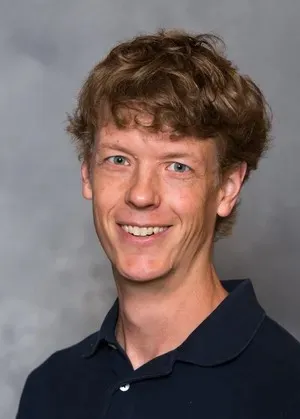
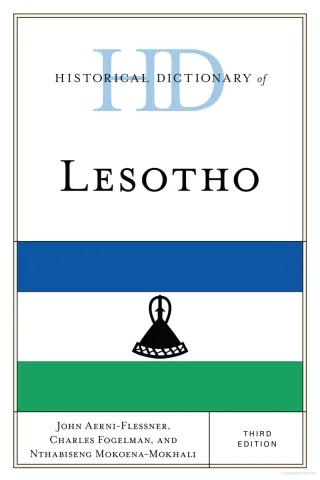
In this series, WashU History alumni reflect on their time in the program, the research that continues to inspire them, and the careers they have built since graduation. We're continuing this Q&A series with 2011 PhD Graduate, John Aerni-Flessner, who is an Assistant Professor at Michigan State University. Aerni-Flessner is the author of Historical Dictionary of Lesotho, and is also currently working on the biography of a pro-South African businessman from Michigan during the apartheid years.
What drew you to pursue a PhD in History at WashU, and what areas of research most inspired your work here?
I spent time teaching high school in the southern African country of Lesotho and wanted to get back to studying the history of Lesotho. The WashU History Department was willing to take a flyer on me, as in the early 2000s, there was no African History PhD program at the university. Tim Parsons said, “if you are willing to come to a place with no program, I am willing to work with you.” With a bit of a sense of adventure that comes from being in your early 20s ,and having taught in both southern Africa and rural Alaska, that was all the encouragement/challenge I needed. I am still grateful to the Wash U History Department for taking a chance on me!
Tell us about your current work; what questions are you trying to answer, and why do they matter to you?
Currently I am writing a biography of a pro-South African businessman from Michigan during the apartheid years. He used his political connections with folks like Vice-President/President Gerald Ford and his local media empire to build connections with the South African government and tried to persuade the American public to oppose sanctions and divestment. He was deeply connected with both American right-wing funding networks and the South African government (he co-owned a hunting lodge in South Africa with the Minister of Communications in the apartheid regime). He also gave major donations to two Michigan public institutions, both of which were returned to him after lengthy public protest. I want to write a book for a popular audience documenting the connections between pro-South African activism and the rise of a global right-wing information campaign of which this man is an exemplar. My last book was written for a hybrid audience (scholarly and popular audiences at the same time). I want this book to be the same, but since I will be dipping my toe into American History for the first time, I am a bit nervous about jumping into this much more well-trod ground.
What has your professional path looked like since completing your PhD?
I came out of WashU simply wanting to teach at the university level. As I grew into my first job, I realized how much the research process really does shape teaching and found that I really loved writing—academic writing, writing for a popular audience, etc. And so, the longer I stay in the profession, the more I want to write, while keeping a strong focus on teaching. Inspiring students to learn how to dig deeper into topics and find their own voice will be my greatest joy until the day I retire (and perhaps even after).
How did your time at WashU shape the way you approach research, teaching, or public engagement today?
I think the general milieu of WashU encouraged us to think broadly. Since the program was small, there was no way to simply immerse yourself only in one small sub-field that was going to become an individual specialty. I had to learn how to make my work broadly interesting to scholars of North America, of Europe, and of Latin America, which has helped me translate my specialist knowledge on southern Africa to broader audiences, both within academia and outside.
What have been some of the biggest challenges or rewards in your career so far?
What surprised me most is how versatile my PhD is. While I was training in African History, I have worked on local history projects in Michigan with community groups and the research, interviewing, and writing skills that I developed in the PhD program have all come in handy.
I have also found that writing for popular audiences (media, commentary, books geared for a generally educated but non-specialist audience) has been some of the most rewarding work I have done. I didn’t see myself as a writer when I arrived at graduate school and now largely define myself that way, which is a change I did not see coming!
What advice would you share with current graduate students who are thinking about the next steps in or beyond academia?
Find your voice. That can be in the classroom as a teacher. As a researcher. And as a public scholar. We can and should be historical scholars in all contexts of our lives. The place where you are employed can be the place where most of your energy goes, but it does not need to. Find connections in local communities where you find yourself and the skills that we have developed will come in handy for someone!
Finally, what advice would you give to those who are considering pursuing a PhD in History?
Think hard about who you are and how this fits with your current life goals. Pursuing a PhD because you are just generally “good at school” is typically not a great idea. Making sure that you can explain why this area/topic/field is your passion and what you want to get out of this experience will enrich your years of PhD study. Having a focus and a vision are the key to not only getting to completion in good time, but they will make a great springboard for you to do many possible things when you are done.
The History PhD Program at Washington University in St. Louis is celebrating its 100th anniversary in 2026!
Join us on September 19, 2026, from 9:15 a.m. to 4:30 p.m. as we celebrate a century of history, scholarship, and community.