A PhD in History can lead to a wide range of careers and opportunities.
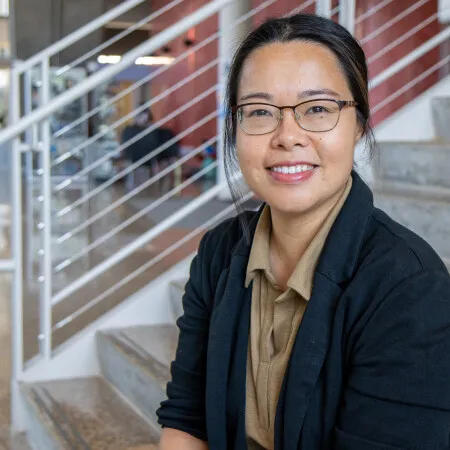
In this series, WashU History alumni reflect on their time in the program, the research that continues to inspire them, and the careers they have built since graduation. We're continuing this Q&A series with 2015 PhD Graduate, En Li. Li is an Associate Professor of Modern East Asian History and serves as the Program Coordinator for the Asian Studies Minor at The University of Texas at Dallas.
What drew you to pursue a PhD in History at WashU, and what areas of research most inspired your work here?
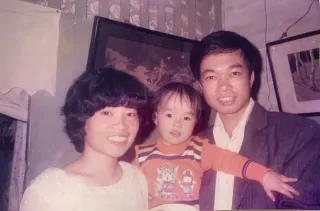
I grew up in the 1980s, when China was hungry for contact with the outside world. My mother woke me up from a nap to take me to a one-time re-showing of Superman at a movie theater in 1986. My classmates and I spent our middle-school lunch breaks wandering the street in search of pirated CDs by the Backstreet Boys and Westlife. A meal at McDonald’s was a luxurious prize reserved for when I got good grades. I went to college in the early 2000s, shortly after China joined the WTO. Going abroad to study in the United States became the No.1 choice for many college students. When a study-abroad consulting company came to campus to give a talk in 2001, the grand lecture hall was packed hours in advance, with students standing at the back as if it were a rock concert.
My parents never went to college, and I was placed to major in Chinese literature, so I had no idea how to go abroad. The year before I graduated, the Yale-China Association began sending Yale graduates to my university, a southern Chinese school designed by Christian missionaries in the 19th century, to teach English. Each teacher stayed for two years. During the evening classes twice a week, there was no set syllabus; the teachers created their lessons based on their interests, and many were history majors. One night we read New York Times articles about the Columbine School shooting; another night we learned about the American two-party political system; another night we learned about so-called “pick-up lines” at bars. For one assignment, I wrote about my aunt, who was one of the “sent-down youth” during the Cultural Revolution in the 1970s. She swam across the Shenzhen River to escape communism to Hong Kong and married the first man she encountered on the shore. During a class field trip, we ventured into the five-star White Swan hotel in Guangzhou and interviewed American couples who had come to adopt baby girls. On the first day of class, one teacher asked us our names. Most English names at the time were variations on “Tiger,” “Cat,” and “Bear”—mine was “Lion” because it sounded like my Chinese name—so the whole class sounded like a zoo. The teacher wrote everyone’s name down on a piece of paper and called us by our chosen names throughout the semester. This Yale-China program lasted only for a few years, from roughly 2004 to 2008, and was open to a small group of students in Chinese literature, philosophy, and history. Though brief, it gave me a different perspective on what “history” could be: a rich soil in which you can study almost anything. It also gave me a “cool” impression of what a historian could be: someone who is difficult to be surprised, and difficult to be offended.
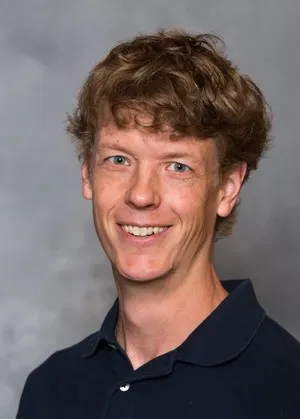
As I became more interested in history, an Oxford-trained history professor whose classes I was taking introduced me to Steven Miles. As he still does, Dr. Miles frequently came to Guangzhou to conduct research on the social and cultural history of southern China. I nervously waited for him beside a lotus pond outside of the Guangdong Provincial Archives one summer day in 2006. Later that year, I wrote and published a book review of Dr. Miles’s first book. It was my first opportunity to seriously engage with an English-language historical monograph. I found the work meticulous and insightful. At the time, I was a newspaper intern, so I was accustomed to writing on tight deadlines, but I had not yet realized how meaningful academic writing could be. I applied to a dozen history graduate programs in the United States and became Steven Miles’s first doctoral student at WashU in 2007.
Tell us about your current work; what questions are you trying to answer, and why do they matter to you?
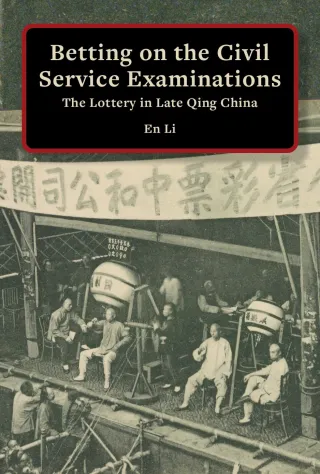
My first book is about an organized lottery game based on the Civil Service Examinations in 19th century China. I wanted to work on something that I was familiar with—the social and cultural history of imperial China—something I cared about—education and meritocracy—and something I could reasonably finish. Beyond providing an entry ticket to an academic career, finishing the first book opened opportunities to ask questions that are more personal.
I started to dance Hula with my husband while I was at WashU, and I have been writing about our dancing journey alongside my career as a historian. After we perform, people often come up to us and ask, “Hey, I have been to Hawai’i too, so which island are you from?” I was born and raised in China, while my husband grew up in the Midwest. We did not make our first trip to Hawai’i until 2025, after a decade of learning and performing Hula on the mainland. When I was writing the last chapter of my first book, I learned that many Chinese, especially Cantonese, had migrated to California and Hawai’i since the 19th century. That made me curious: Did people dance Hula outside Hawai’i, or was it just us? Today, roughly two million people in Japan regularly dance Hula—more than the entire population of Hawai’i. I have been tracing the story of how Hula was first introduced to China, as part of a larger history of urban life and archipelagic connections among South China, Southeast Asia, and Hawai’i in the 1930s and 1940s.
Scholarship on modern China has explored how ideas transformed people. In the Hula story, it seems to me that the body transformed the mind. There are many studies of how dancing can help people develop resilience through movement. Having been taught to be a “good girl” while growing up and having spent much of my professional life maintaining a certain status quo as a scholar and teacher, I am fascinated by the different possibilities the movement can create, both for the Hula dancers in Republican China, and for myself.
What has your professional path looked like since completing your PhD?
After I graduated, I took my first job as an assistant professor at a teaching-focused college in Iowa. I worked there for seven years. The year that I received tenure in 2023, I moved to position at a research university in Texas, where I received tenure again in 2025.
How did your time at WashU shape the way you approach research, teaching, or public engagement today?
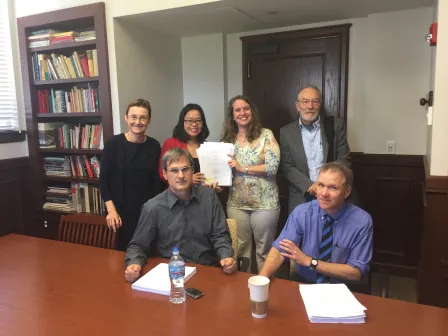
The most important change was probably my transition from being a consumer to being a creator of knowledge. Coming from China, WashU was my first American academic training, and it helped me develop the confidence to ask questions. Before coming to the United States., I was good at answering questions, but I never thought that my own questions mattered. I remember once asking my advisor what I should work on for my dissertation. I was hoping he would assign me a magical topic that is important enough for me write about. Over time, I learned that asking the question is itself an important part of being a scholar. Beyond giving me the confidence to ask questions, WashU also gave me the tools to pursue them, especially the craft, discipline, and rhythm required for an academic career. My dissertation helped me get my first job and I continue to draw on classes that I took at WashU when I teach my own students.
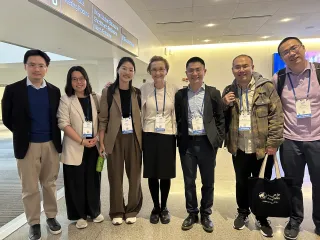
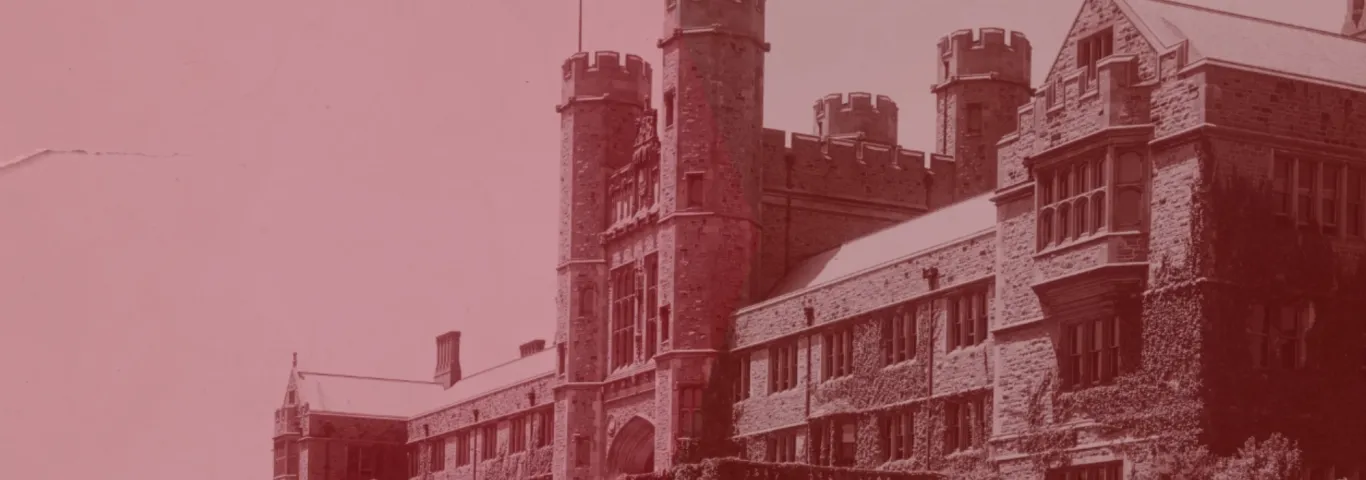
In addition to the tangible training, teaching at different schools and living a busy life of my own has made me realize how generous my WashU professors were with their time and talent. I remember all the long afternoons I spent with Lori Watt at her second-floor office in Busch Hall. Christine Johnson went over the readings with me before each class in Early Modern Europe. I was thrilled when the late Maggie Garb gave me my first “A” for a historiographic essay. Robert Hegel shared mind-blowing references in Chinese literature. Tim Parsons helped me stage a theatrical opening for a summer grant proposal. Daniel Bornstein conducted a mock job interview with me and followed up at every step of my job search that year. Derek Hirst came to my practice job talk and taught me never to patronize the questions during Q&A. Pauline Lee passed her daughter’s clothes and toys to me when I was pregnant right before my comprehensive exams. When I returned to a Japanese writing class after childbirth, Ginger Marcus knitted a hat for my new-born son.
The best gift from WashU, however, was my husband. We met in class at WashU, and we spent much of our “WashU” time dancing, jogging, and rehearsing the discussion sections I taught as a TA. The year I graduated from WashU, I deferred my first academic position for a year so that we could move with him as a family when he started his medical residency, while he chose to match at the residency program closest to my new job and commuted between the two cities for another two years. I have written about our “WashU love story.”
How have you applied your historical training beyond academia?
Although I have remained in academia, I appreciate the ways historians tell stories about people. That inspired me to start a podcast called “Tenure: A Game Manual” in which I interview friends and colleagues about their experiences with the tenure process. I hope to humanize the process, otherwise tenure feels like a set of abstract and standardized requirements.
Another skill historians develop is the ability to make sense of a wide range of materials and turn them into compelling stories. I give public talks and contribute to K-12 programs to share my research with different audiences. I try to approach each presentation almost like a TED talk: tell the story, make it entertain, and give people some meaning to take home with them.
In the current digital age, the ability to learn may be more important than ever. Graduate training taught me how to broadly read every week to quickly familiarize myself with a new field. That is a useful mindset for lifelong learning.
Historians also have a lot of administrative work to do beyond simply “writing” and “teaching”: research trips, managing archives, organizing notes, communicating with students, etc. Those project-management skill make all kinds of administrative work less unbearable.
What have been some of the biggest challenges or rewards in your career so far?
One challenge has been starting as an international student. When I applied for a Ph.D. in History, it was almost the only way that I could study in the United States with a full scholarship. I did not have much guidance, and I did not give much thought to what the profession is like. It is interesting to think about how much time that I spent diving into a profession that so many people had already been planning their exit from. Navigating graduate school as a non-native English speaker was not always easy. I was the only international student in the program for my first several years. Sometimes I would read an entire book and take pages of notes, but still have no idea how to contribute to a seminar discussion. Oftentimes a classmate made a quick joke and the whole class laughed. I had no idea why. No matter how much I “achieved,” I have never felt as though I had spontaneity. I am always over-prepared, even today. Over the past decade, I first taught in a mid-size regional college, where I was the only person who taught Asia, and later moved to a larger research university, where opportunities to interact with colleagues on a day-to-day basis were more limited. It is also not easy to make friends outside of work when you get older. I have been looking for ways to engage with the broader society. Many international faculty also face visa challenges. A graduate-school classmates described his parallel journey through the visa process and the tenure process in one of our podcast episodes.
Another challenge is having a family. So many clocks seem to tick at the same time. School and career are intense, but the challenge also comes from the competing demands in life. It is impossible to separate those responsibilities and only talk about the “career” in isolation. As historians, we learn to provide historical contexts and develop a sense of historical empathy. But there is little room in professional documents to contextualize our own work. Oftentimes it feels as though unless you succeed, the circumstances of your life can easily be interpreted as an excuse for incompetence.
I guess the ultimate challenge is the uniqueness of this profession. During my undergraduate years in China and my doctoral training in the United States, I did not fully understand what an academic career would require. Later, as my responsibilities grew, it became harder to sustain the same goals without the same time and effort required to pursue the career path I chose in my 20s. Not many professions attach so much personal identity and pride to a career. If you quit academia, it can feel as though you have lost.
I find comfort in research and writing. And the job continues to provide me with space where I can create, build, and grow, especially amid all the isolation, responsibilities, and uncertainty that are part of life in general.
What advice would you share with current graduate students who are thinking about the next steps in or beyond academia?
Start with what interests you and aim for a project that you can finish yourself. There will always be time in the future to revise and refine your work, so do not take too long to finish the first draft.
Teaching and writing are like running a marathon: they require discipline and persistence beyond talent alone. But nothing is worth sacrificing your health and your life for. Do not postpone everything until after dissertation or tenure. Scholarship should make you live your life better, but not the other way around.
Finally, what advice would you give with those who are considering pursuing a PhD in History?
Academia can be a good job. It is not a job that will make you rich. The best features are flexibility and autonomy. You get to create meaning and leave a mark in this transient life. The best part of the job, however, often comes later in the career. So do not give up too early. The grass is not always greener on the other side.
A Ph.D. in the humanities represents a small and competitive path, and you usually do not get to decide where you will live or work, at least early in your career. There is a great deal of luck and randomness in the academic job market. But that does not mean you should not do your very best to develop your skills and prepare yourself for the opportunities that come your way.
Academia in general was not designed with first-generation academics, international students, or faculty parents in mind. If you are one of those people, and if you have the skills and luck to make it to the other side, try to make the profession better for the people who come after you.
The History PhD Program at Washington University in St. Louis is celebrating its 100th anniversary in 2026!
Join us on September 19, 2026, from 9:15 a.m. to 4:30 p.m. as we celebrate a century of history, scholarship, and community.