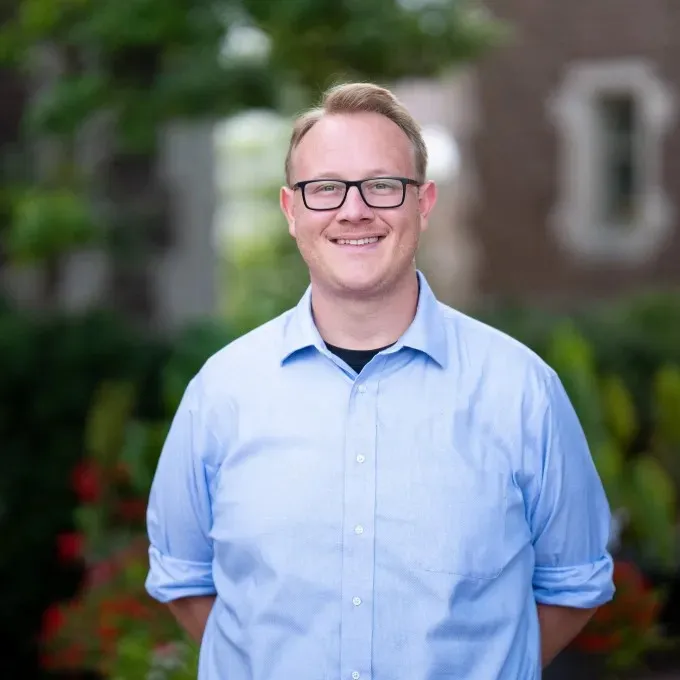
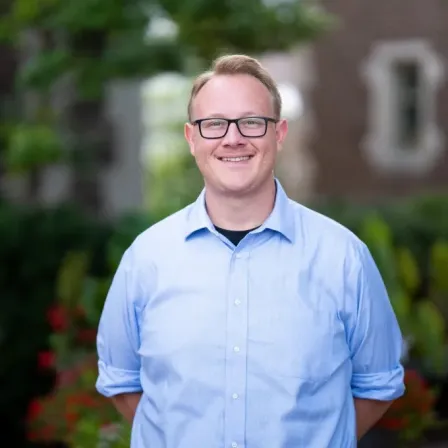
In this series, WashU History alumni reflect on their time in the program, the research that continues to inspire them, and the careers they have built since graduation. We're continuing this Q&A series with 2023 PhD Graduate, Justin Meyer, who is the Academic and Administrative Coordinator for the John and Penelope Biggs Department of Classics at WashU. Meyer is an intellectual historian of the German Renaissance and, although he has transitioned out of academic teaching, is still an avid researcher and is currently working on his first book project, Patriotic Scholarship in the German Renaissance, 1450-1580.
What drew you to pursue a PhD in History at WashU, and what areas of research most inspired your work here?
I wanted to get a PhD in history and WashU’s history department had one of the only scholars in the US who had written directly on the topics I wanted to study.
Tell us about your current work; what questions are you trying to answer, and why do they matter to you?
My current work is the same work I began at WashU: figuring out what exactly drove German intellectuals in the Renaissance to cultivate a new notion of German identity based on geography and ancient knowledge.
What has your professional path looked like since completing your PhD?
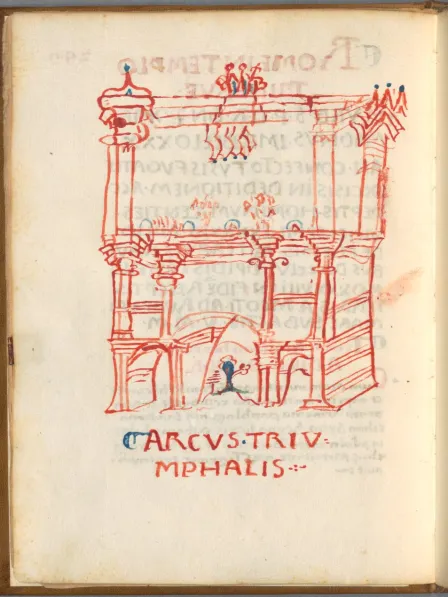
I was an adjunct lecturer in Classics at WashU for 3 years, before I made the very recent transition to a job in WashU’s administration.
How did your time at WashU shape the way you approach research, teaching, or public engagement today?
It shapes almost everything I do, by supplying a critical, relativizing lens to each of the situations I find myself in. It is the cornerstone of my continued research, the well of experience I draw on when I find myself in situations teaching others, and the set of critical facilities I apply in trying to live in and understand the US in 2026.
If you’ve transitioned beyond academia, how have you applied your historical training in your current field?
My transition is very new, so I am still learning the various ways I apply my historical training. Most significantly has been my ability to learn quickly.
What have been some of the biggest challenges or rewards in your career so far?
The biggest challenge was trying to find an academic job. The biggest reward was accepting that I was most likely not going to find an academic job and transitioning into an alt-ac position—I get more research done now than when I was in an academic position!
What advice would you share with current graduate students who are thinking about the next steps in or beyond academia?
Meet people. The often-unsaid advice for succeeding inside and outside academia is knowing people. Every position and opportunity I received in the last 5 years came simply from having personal connections.
Finally, what advice would you give with those who are considering pursuing a PhD in History?
Do it because you want to. There is no better reason.
The History PhD Program at Washington University in St. Louis is celebrating its 100th anniversary in 2026!
Join us on September 19, 2026, from 9:15 a.m. to 4:30 p.m. as we celebrate a century of history, scholarship, and community.