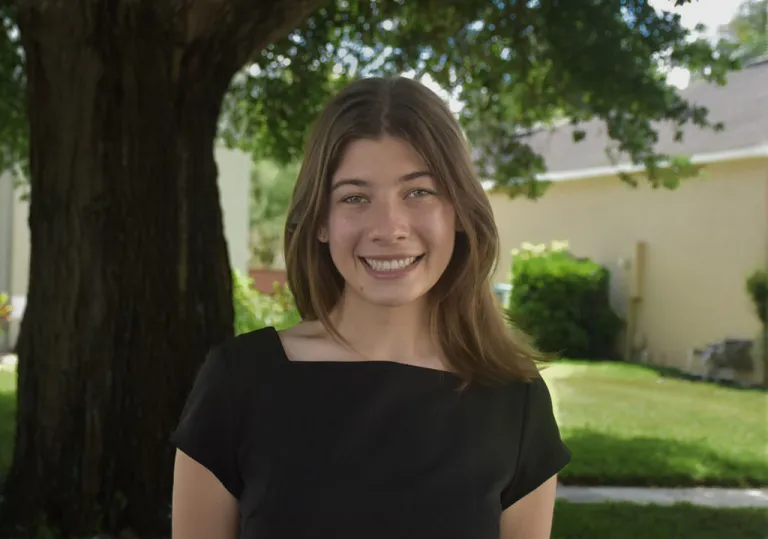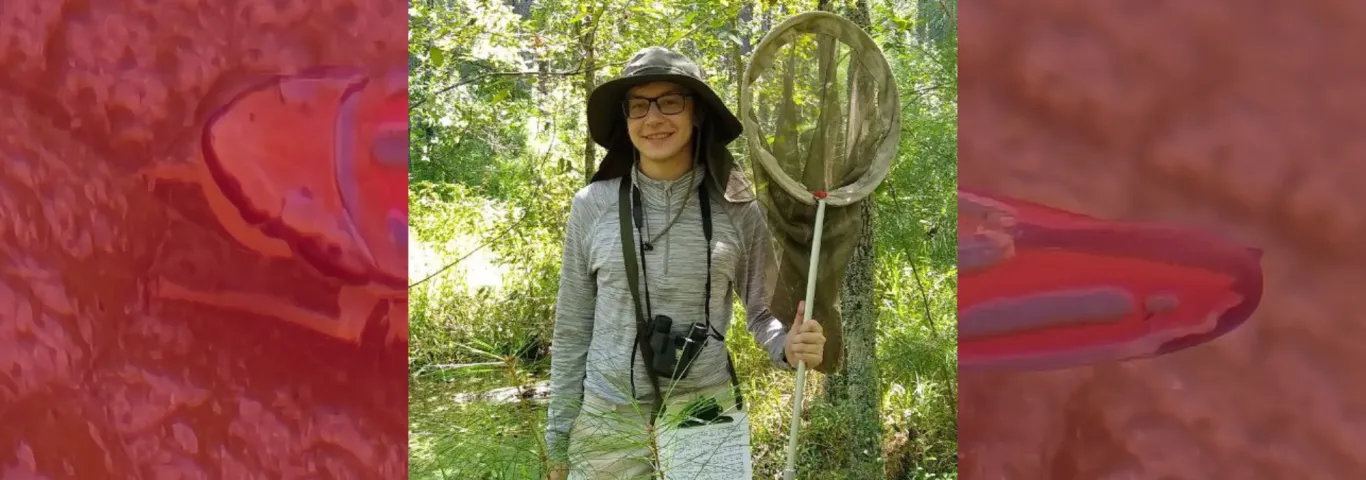
Kiegan Baranski, a WashU History undergrad 2020 alum, has found a fulfilling career focusing on the environment, supported by his skills learned through his undergraduate years at WashU.
I had the pleasure of learning from some excellent professors who were very passionate about what they taught, and that ignited a passion within me as well.
Even back in high school, I had great teachers for AP World & US History who showed me that history is much more than just learning significant dates, it's immersing yourself in the perspective of someone who lived a completely different life in a different context from your own experience. When I got to WashU, one of the first classes I took was about the medical history of mental illness taught by Dr. Christina Ramos, and I knew that history was what I wanted to study most with my time in college, even though it was a different major than what most other pre-meds chose. I think studying history gives us an important tool to search for the voices of the unheard, and to always challenge our own assumptions and biases. I truly love learning about how different and similar life has been throughout time, and seeing how history informs our present-day reality.
How did your interests in history evolve during your time at WashU?
From freshman through junior year, I was pre-med, and have always been very interested in medical history as a way to understand why the state of medicine is the way it is now. I think anyone going into medicine should have an understanding of the ways that medicine- like all other institutions we build as humans- isn't an objective science, and will always be biased by those practicing it. Learning from Dr. Corinna Treitel also played a huge role in encouraging my fascination with medical history during my time at WashU, leading to me choosing the Medical Humanities minor as well. In senior year, I decided not to continue on with pre-med, and study environmental biology instead. Still, my interest in history remained steadfast, and I completed both my History major and Medical Humanities minor, including my final independent research paper studying the rise and fall of the American medical museum. The classes I took for these programs were my favorites in college, and the ones I still remember the most.
Where did your education/career take you after graduation?
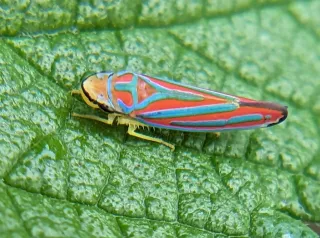
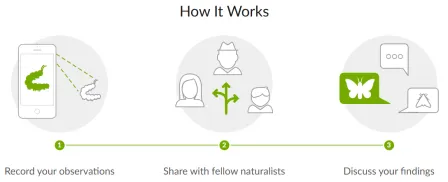
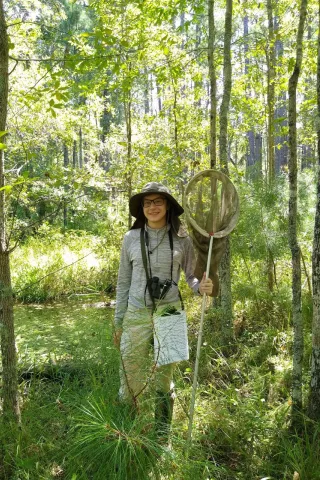
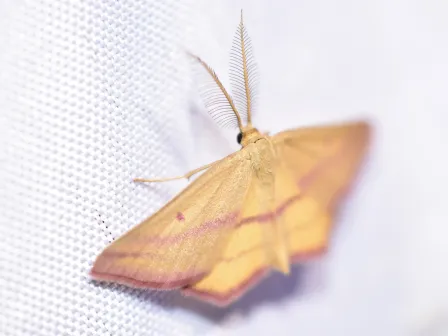
I now work in ecological restoration, following the path of my second major: environmental biology. I graduated in spring of 2020, right as COVID shut the world down, so most jobs were on a hiring freeze. I took seasonal work as an environmental research technician, doing everything from measuring the height of prairie grasses, to identifying rare plants on Missouri's last remnant prairies, to trudging through North Carolina swamps searching for a critically endangered butterfly (the photo included is me at that job). Eventually, I had an internship where I learned land restoration techniques like prescribed fire, invasive species control, forestry, and native seed collection & planting, so now I continue that work here in St. Louis, restoring woodland and prairie habitats. I'm also pursuing a Master's degree in Entomology, and working on my final research project. It's a citizen science project: anyone can post photos of insects they find in Forest Park to iNaturalist, and I do my best to identify them and catalog them into a species list that shows the park's biodiversity and the value of the park's 130+ acres of restored habitat. So far, there are over 1,500 insect species found in the park, with several rare and even newly recorded species for Missouri.
How has your background in history informed the way you approach your current work?
Studying history taught me an investigative mindset that helps me address big problems by first asking how we got here, and trying to see the big picture.
Even though I didn't go into medicine as I had initially planned, my understanding of history has been just as useful in contextualizing my current field as well. Understanding the history of the land and the people who care for it, the role of colonization in disrupting native ecosystems, how we use land today, and the histories of the various invasive plant species we dedicate most of our time to managing is all vital in understanding what's needed to recreate and restore Missouri's rich ecosystems. Studying history taught me an investigative mindset that helps me address big problems by first asking how we got here, and trying to see the big picture. It also taught me to think critically and how to read any piece of writing by asking: who's writing this and why? Are they writing from their own experience, or what kinds of sources are they using? These frames of thought will guide you in life no matter what you do for work.
What advice would you share with current students as they think about their career after graduation?
Don't sacrifice some of your interests for the ones that you think will land you the best job or produce the nicest-looking résumé: do what you love and keep your options open. You don't have to stick yourself in one path for the rest of your life, so don't narrow your focus prematurely to what you think will be most practical later. Use this time to explore your interests, study what you're really fascinated by, and meet others who share that enthusiasm. Be open to trying new things, broadening your perspectives and experience, and being inspired by the people around you. As much as you can, try to engage all of your passions to keep all your doors open- you'll never know which of them will end up shaping your future. I neglected to mention that through all my studies and jobs, I've also always kept up doing art as a side business, which ended up being how I met my partner. You really never know where life will lead you if you foster your passions, so nurture them well!
LEARN MORE
Learn more about what you can do with a degree in history: What can you do with that history degree? Exploring the data
Learn more about studying history and why history matters from the American Historical Society.
Visit iNaturalist to learn more about how you can support their initiative for the environment and how you can take part.