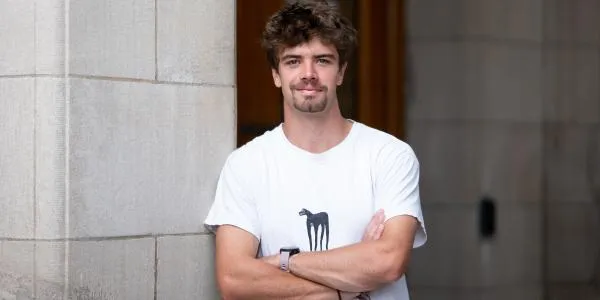
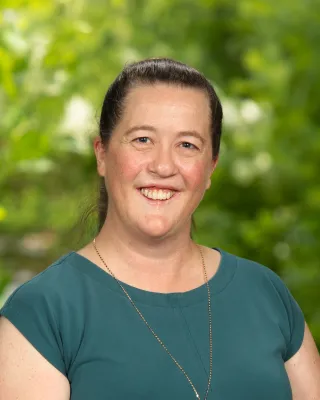
A PhD in History can lead to a wide range of careers and opportunities. In this series, WashU History alumni reflect on their time in the program, the research that continues to inspire them, and the careers they have built since graduation. We're continuing this Q&A series with 2011 PhD Graduate, Tanya Roth, who teaches high school history at MICDS (Mary Institute and Saint Louis Country Day School) in St. Louis and is the author of Her Cold War: Women in the U.S. Military, 1945-1980.
What drew you to pursue a PhD in History at WashU, and what areas of research most inspired your work here?
I lived in St. Louis and I didn’t have the ability to leave the area for a PhD. I applied and have always been grateful that the graduate admissions committee took a chance on me and my passions. I knew I wanted a PhD in History, and I knew I wanted to keep pursuing the question of what happened to women after war, building on my undergrad thesis about British women nurses in WW1. In my first semester, I took Krister Knapp’s Cold War course and decided I’d do my research that semester on servicewomen in the early Cold War – bolstered by a book that had just come out from the Women in Military Service for America foundation. I discovered that women were given equal pay and rank in the military in the years just after WW2, but decades before Second Wave Feminists fought for equal pay. I spent the rest of my time at WashU pursuing servicewomen’s history.
Tell us about your current work; what questions are you trying to answer, and why do they matter to you?
I’m still most interested in exploring women’s history, but I don’t have any big questions I’m trying to answer at the moment. For me, I think I tend to be most interested in exploring those histories that are seldom retrieved from American memory. I think this is most reflected in my monthly column with Saturday Evening Post, where I have the opportunity to explore anything in women’s history that I think might be interesting. In my teaching, I am focused on the question of how to get students interested in the past and helping them find connections and new ideas. It can start with seeing themselves in history, or finding something that they feel they can particularly understand. The same goes with my columns – I want to spark curiosity and interest.
What has your professional path looked like since completing your PhD?
I was offered my teaching job at Mary Institute and Saint Louis Country Day School (MICDS) the week before I defended my dissertation. I defended, secure in the knowledge that I had a job in the fall. In the past 15 years, I’ve become part of a community, I’ve gotten to teach and learn with hundreds of high
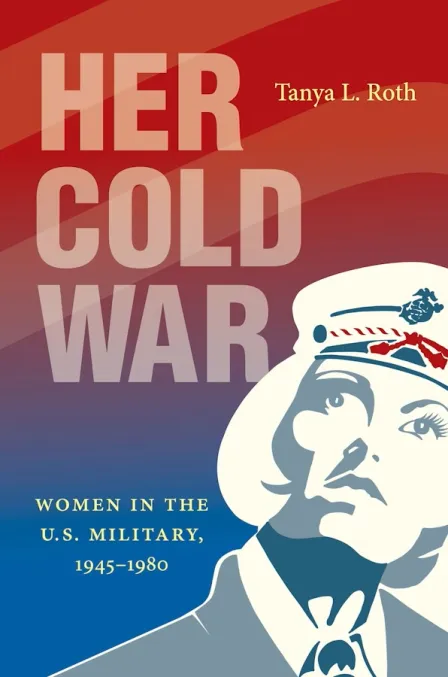
schoolers, and I get to collaborate with incredible people every day. It took me 10 years to get my dissertation published as a book, but even the fits and starts of that were important in the process. Being able to publish a book while being a high school history teacher was an important personal and professional accomplishment. I’ve had chapters published in 3 books (as of this fall), in addition to my own monograph, and I’ve spent more than 2 years writing a monthly women’s history column for the Saturday Evening Post. I continue to love teaching at MICDS and getting to be in such a great community.
How did your time at WashU shape the way you approach research, teaching, or public engagement today?
It laid the foundation in every way. I took away so much advice on writing and research that has been passed on to my students. My time at WashU, particularly with Tim Parsons’ encouragement, got me doing oral histories and learning the methodology behind that type of work. I’ve gotten to mentor students in independent studies and draw on the types of questions my WashU professors and mentors asked me. My time at WashU opened the world for me as a scholar, writer, and teacher. I would not be where I am today without those six years getting to work with the faculty at WashU.
If you’ve transitioned beyond academia, how have you applied your historical training in your current field?
When you teach high school, you might not go as deeply into areas of history that you might like. At WashU, I wasn’t just immersed in six years of historical training – I got to live a life of the mind, and that’s something I hope I continue to model to my students today. I love reading history, writing history, talking about history, teaching history, and I hope that my students take away not just an investment in historical training themselves, but the idea that we can pursue our passions and have truly fulfilling lives.
What have been some of the biggest challenges or rewards in your career so far?
Not finding a tenure-track job felt like a really big job, and sometimes I still feel a little bit out of place; I have a book I’ve written, and it won a major award (and I won a major fellowship while still in grad school). I think about the colloquia I attended in grad school with visiting scholars; high school teachers do not often receive invitations like that even when they publish a book (I have had 2, which I was very thrilled to get!). I don’t think that people like me are very high on any radar in higher education. On the flip side, since I don’t have a teaching certificate, sometimes it’s easy to feel like you don’t quite fit in in education either. This is less true the further I go in my career, but I think those were the early-on challenges I felt of being a high school history teacher with a PhD.
I won the Coffman Prize at the Society for Military History, which was a big moment and thrill for me. Every time I publish something, no matter how small, it feels like a big celebration that I’m still researching, writing, and teaching.
Beyond that, it’s so rewarding to get to see so many wonderful students come through my classroom, grow, graduate, and then – hopefully, ideally – come back to say hello and tell me where their lives have brought them. It’s rewarding to hear from a former student who is now a teacher and wants to ask advice about teaching, and it’s rewarding to get to have lunch with former students who I now call colleagues, as well.
What advice would you share with current graduate students who are thinking about the next steps in or beyond academia?
In my final year or two, someone kept reminding us all that getting a tenure-track job is like winning the lottery. I’ve never forgotten that. For me, the key was to be flexible. There are so many ways you can go with a PhD, and at the end of the day, I think the question is: what was your “why” for doing this?
I was crazy about history and researching and learning, and that turned into a love of teaching on top of that. Find what you love about doing history – and know that it might not always be in a tenure-track job.
What advice would you give with those who are considering pursuing a PhD in History?
Be flexible and pursue your passions. If you’re going into it thinking you’re only going to have a singular outcome – a tenure-track job – or that everyone will fall all over your work and your brilliance, well, neither of those things is a given. I think that to do a PhD in History you have to really want to do it because you love history and you can’t see yourself NOT pursuing that topic or that subject. Don’t do it for anyone else – do it for yourself.
The History PhD Program at Washington University in St. Louis is celebrating its 100th anniversary in 2026!
Join us on September 19, 2026, from 9:15 a.m. to 4:30 p.m. as we celebrate a century of history, scholarship, and community.