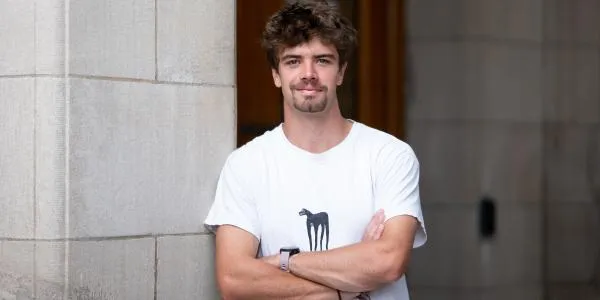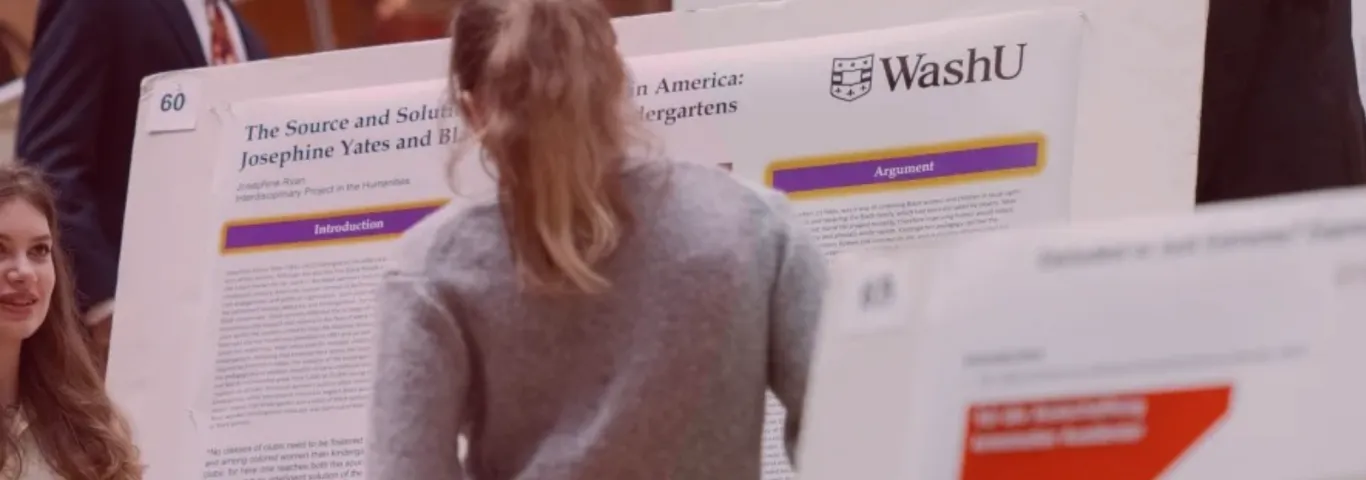
Lulu Ingham took part in the Undergraduate Research Symposium in the fall of 2025. Her research interests span topics such as African History and French studies.
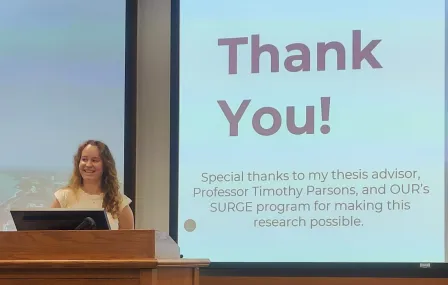
She shares her thoughts on the experience below, as well as provides advice on how to get started. Ingham also shares her experiences in working with faculty in History, including Professor Tim Parsons and Professor Steve Hindle.
Twice yearly the Office of Undergraduate Research sponsors the Undergraduate Research Symposium. Students in all academic departments, programs and schools are encouraged to present their original research. In addition to poster sessions, the symposium program includes a keynote address, selected student talks, performances and demonstrations of projects.
How was the research question born (how did you decide on your research topic)?
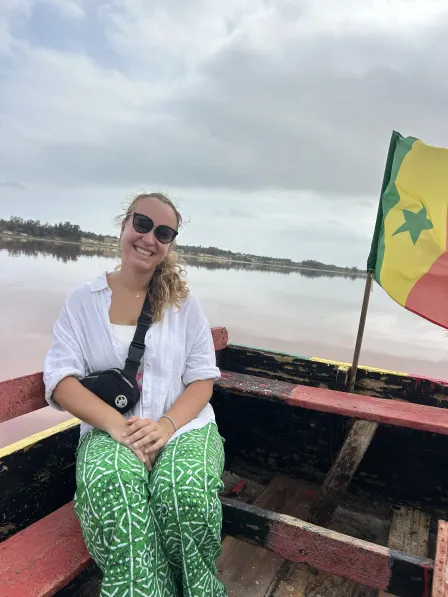
Two of the most transformative parts of my college education were taking the African history seminar with Professor Parsons and visiting the Museum of the Liberation in Paris during a 3-week French intensive. These experiences motivated me to combine these two fascinating topics into a research project on Francophone Africa, but I wasn't sure how to narrow down my topic. The summer before my junior year, my dad and I watched Casablanca. That film inspired my topic, as I realized the important cultural and political role major port cities played in the war effort. I decided to focus my thesis on Dakar, Senegal, as its position as the capital of French West Africa, as well as its port, rendered it the site of intense turmoil during the war. After that, Professor Parsons advised me to visit archives, conduct interviews, and then see what kind of interesting information I found! I ended up finding a document discussing Vichy oppression in Dakar that included a long list of Africans who were arrested for crimes like espionage and treason. This document shaped my research, as I aimed to investigate what resistance looked like for everyday Africans living under a fascist, colonial regime.
How did your training in history shape the project?
While all of my history classes helped me improve my analytical and writing skills and find what regions and time periods interested me the most, two courses truly impacted my project. Professor Parsons taught me how to analyze primary sources, the importance of oral histories, and gave me a strong foundation in African history in his seminar. Professor Hindle's historical methods course on microhistories gave me techniques for analyzing historical moments that lack an extensive source base. I don't think I would have been able to do the same project without them!
If you had to summarize your project in one or two sentences, what would you say?
What was a challenge you encountered with putting together your presentation, and how did you approach this challenge?
I had a really hard time covering all the necessary background information without going over the time limit. I relied on images and practicing with my friends to make sure people could understand Dakar's history and location without running out of time for my actual project.
What was most rewarding about sharing your research with the broader campus community?
I was lucky that a lot of my friends were able to come to my presentation and learn about what I had been doing over the summer. I was very proud to receive that kind of support.
What advice would you give to other history majors considering doing independent research or submitting to future undergraduate symposia?
My advice would be to take every opportunity given to you! Research for the sake of research itself is very valuable, and getting the chance to share with your community at the symposium is rewarding in and of itself.
Hosted by the Office of Undergraduate Research, the Fall Undergraduate Research Symposium showcases the diverse range of faculty-mentored research and creative inquiry conducted by WashU undergraduate students. Presenters will participate in one of several sessions between 10 am - 2 pm on Friday, November 6, in the Clark-Fox Forum and other locations in Hillman Hall. Any WashU student is welcome to present their inquiry-based, faculty-mentored project, including works in progress.
Visit the Office of Undergraduate Research website for key dates and instructions on how to apply.