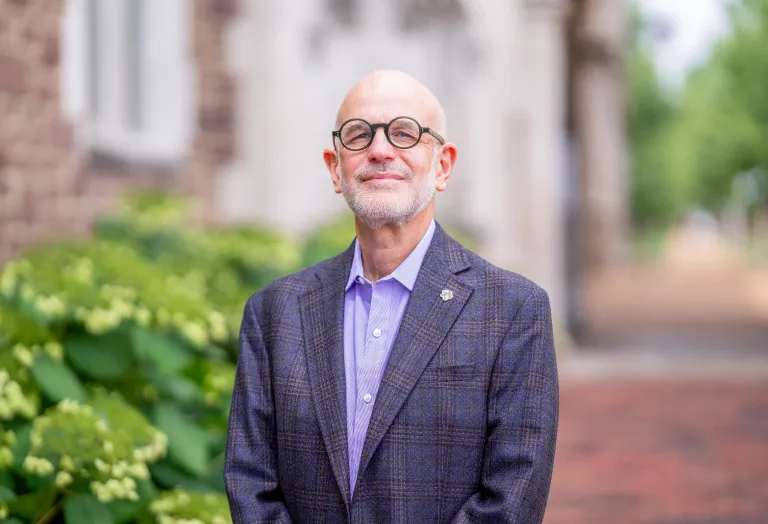
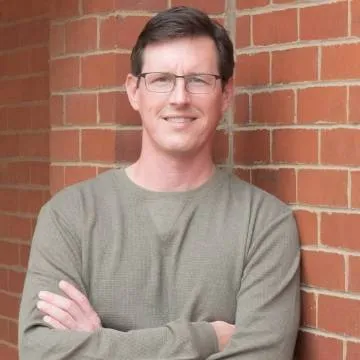
A PhD in History can lead to a wide range of careers and opportunities. In this series, WashU History alumni reflect on their time in the program, the research that continues to inspire them, and the careers they have built since graduation. Through their stories and advice, we hope to give current and prospective graduate students a glimpse into the many possibilities that follow a graduate education in history. Hear from 2011 PhD Graduate, David Pennington, who serves as the Chair of Social Sciences at Webster University.
What drew you to pursue a PhD in History at WashU, and what areas of research most inspired your work here?
I was originally drawn to WashU because of its history department’s strength in British history. I originally intended to focus on early Stuart political history. What I didn’t know before I arrived was that faculty in other fields would play an important role in expanding my research and teaching horizons.
Tell us about your current work; what questions are you trying to answer, and why do they matter to you?
I currently work on the political economy of Tudor and early Stuart England, with a particular focus on how elite and non-elite interests advanced or protected their priorities in Parliament. I want to draw a connection between early modern England’s pluralistic political institutions and its commercial prosperity. My work matters because economic markets are political and social creations which determine which people enjoy opportunities.
What has your professional path looked like since completing your PhD?
After two years as a visiting professor at two colleges, I was hired as an assistant professor at Webster University in 2011. Since then, I have been promoted to full professor. I am also currently the chair of the department of social sciences. I devote roughly equal amounts of time to teaching, research, and administration.
How did your time at WashU shape the way you approach research, teaching, or public engagement today?
WashU’s history program taught me to express my research interests in terms other scholars could appreciate. The requirement to work as a teaching assistant challenged me to engage with students before I felt entirely prepared to do so, giving me valuable practical experience in the classroom.
If you’ve transitioned beyond academia, how have you applied your historical training in your current field?
I am still in academia, but I have applied three times for jobs outside of academia, and in two cases, I made the final round of interviews. The PhD program in history at WashU requires a person to be curious and tenacious. Hopefully there is always a demand for that kind of researcher.
What have been some of the biggest challenges or rewards in your career so far?
The biggest reward is that I get to teach and research ideas that I think are important. I am thankful for the chance to advance the field in what ways I can. The biggest challenge, as a professor and department chair, has been declining enrollments, now accelerating with the demographic cliff. I constantly tilt against administrators who must deal with declining revenues and are looking to cut faculty and programs.
What advice would you share with current graduate students who are thinking about the next steps in or beyond academia?
If you are graduate student pursuing an academic job, attempt to publish in top journals even as you are working on the PhD. But, at the same time, work to set up a plan B and C, because there are plenty of brilliant scholars who never get the tenure track job.
Finally, what advice would you give to those who are considering pursuing a PhD in History?
If you pursue a PhD in history, be clear-eyed about the scale of the commitment and be willing to accept that it may not result in a faculty position. Don’t waste time perfecting the first chapter. Move on to the next chapter; you can always revise later. Once you have many somewhat respectable chapters completed, you’re probably in a good position to defend!
The History PhD Program at Washington University in St. Louis is celebrating its 100th anniversary in 2026!
Join us on September 19, 2026, from 9:15 a.m. to 4:30 p.m. as we celebrate a century of history, scholarship, and community.